
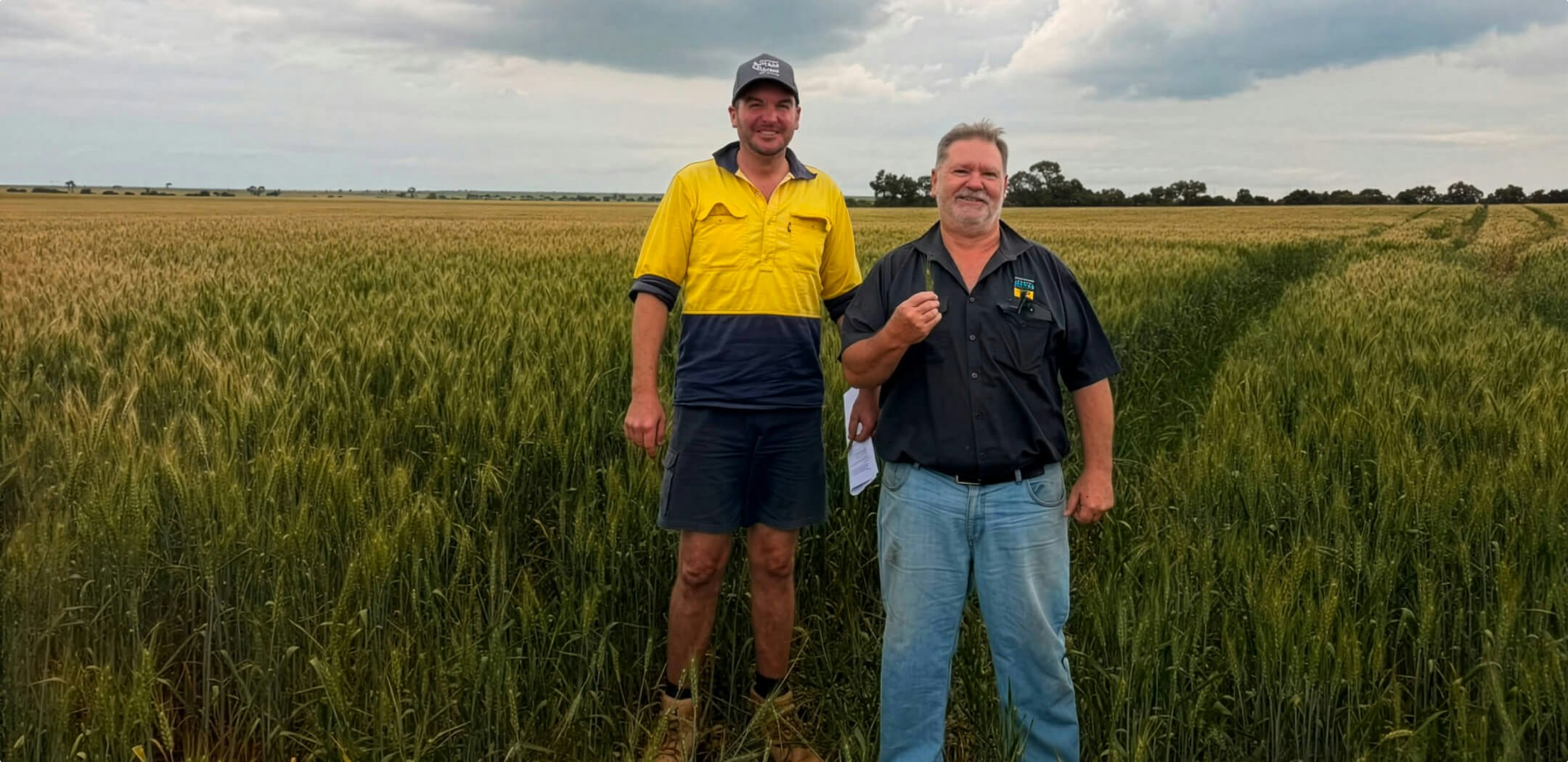
Out in the paddocks, the freekeh crop is nearly there. Grower Brett Davies expects his grain to be ready in the coming weeks.
Timing matters more for freekeh than for almost any other grain. Most wheat is left to mature until it turns golden and dry. Freekeh is harvested much earlier, while the grain is still young, soft and green, when its taste and nutrition are at their peak. That leaves growers and the processing team a short window to work with, and they have to work closely together to bring the grain in at exactly the right stage.
Keven, Greenwheat Freekeh Site Manager, recently visited Brett on the farm to check the crop's progress ahead of the season. Visits like this are a key part of the lead-up to harvest. Growers know their crops better than anyone, and staying in close contact with them means the site is ready the moment the grain is.
Once harvested, the green grain goes straight to the processing site. There it is parched, roasted and dried, a traditional process that locks in freekeh's distinctive smoky, nutty flavour and its nutritional profile. Nothing is added: no additives, no preservatives, just 100% South Australian wheat.
Greenwheat Freekeh was Australia's first producer of freekeh. For nearly three decades it has worked with South Australian growers to produce a grain that chefs, manufacturers and home cooks keep coming back to. Freekeh is high in protein and fibre, with up to four times the fibre of brown rice, and it has a low GI. Its health credentials have recently drawn academic attention. In October 2025 Edlyn and RMIT University published a major review of more than 100 studies, which found freekeh to be a nutritious and agriculturally sustainable alternative to common grains such as rice.
For Edlyn, each harvest is a reminder of where its products begin: with the growers and the land. Every bag of Greenwheat Freekeh starts in a South Australian paddock, and with the site ready and the crop nearly there, the 2026 season is set to get underway.


